Iberian Heritage
Llíria was the capital of Edetania, one of the largest and most important Iberian territories on the Iberian Peninsula. From the 7th century BC, ancient Edeta held political and economic sway over a vast territory stretching from the River Júcar to the Palancia. Today, three archaeological sites preserve the memory of this fascinating civilisation.
CASTELLET DE BERNABÉ
Iberian Settlement in Llíria
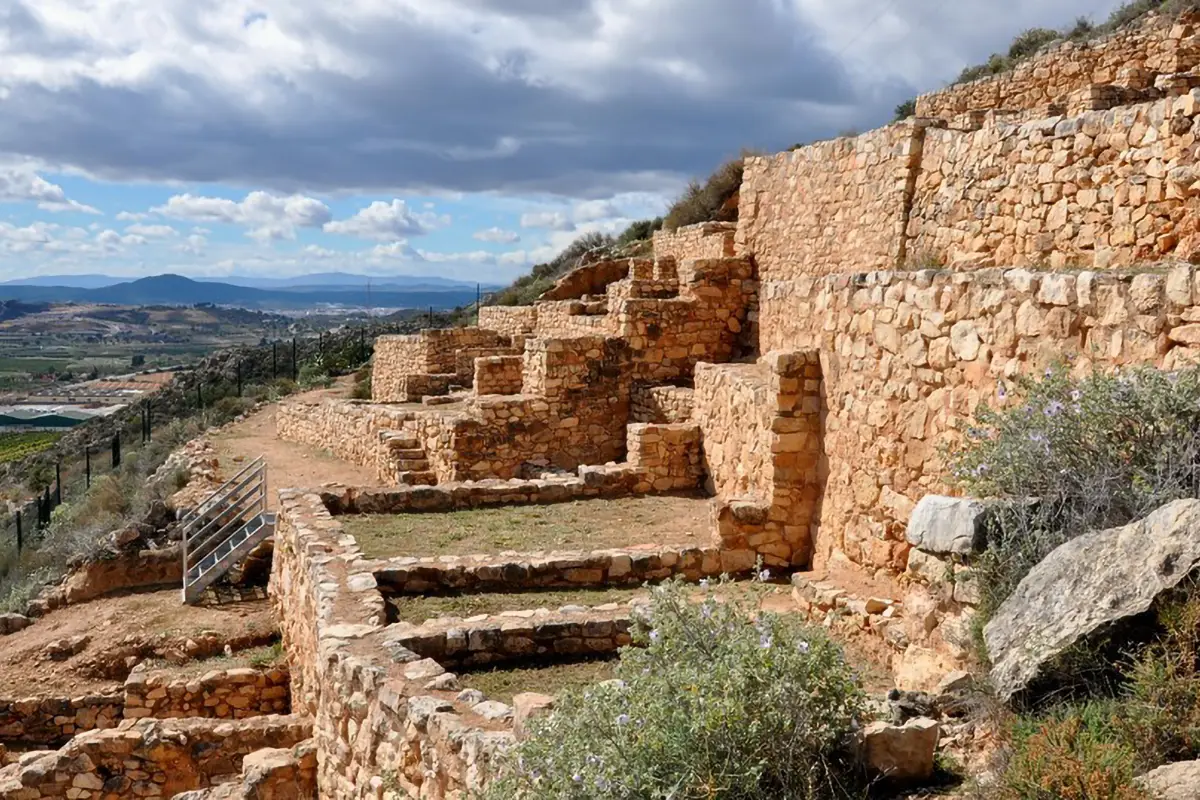
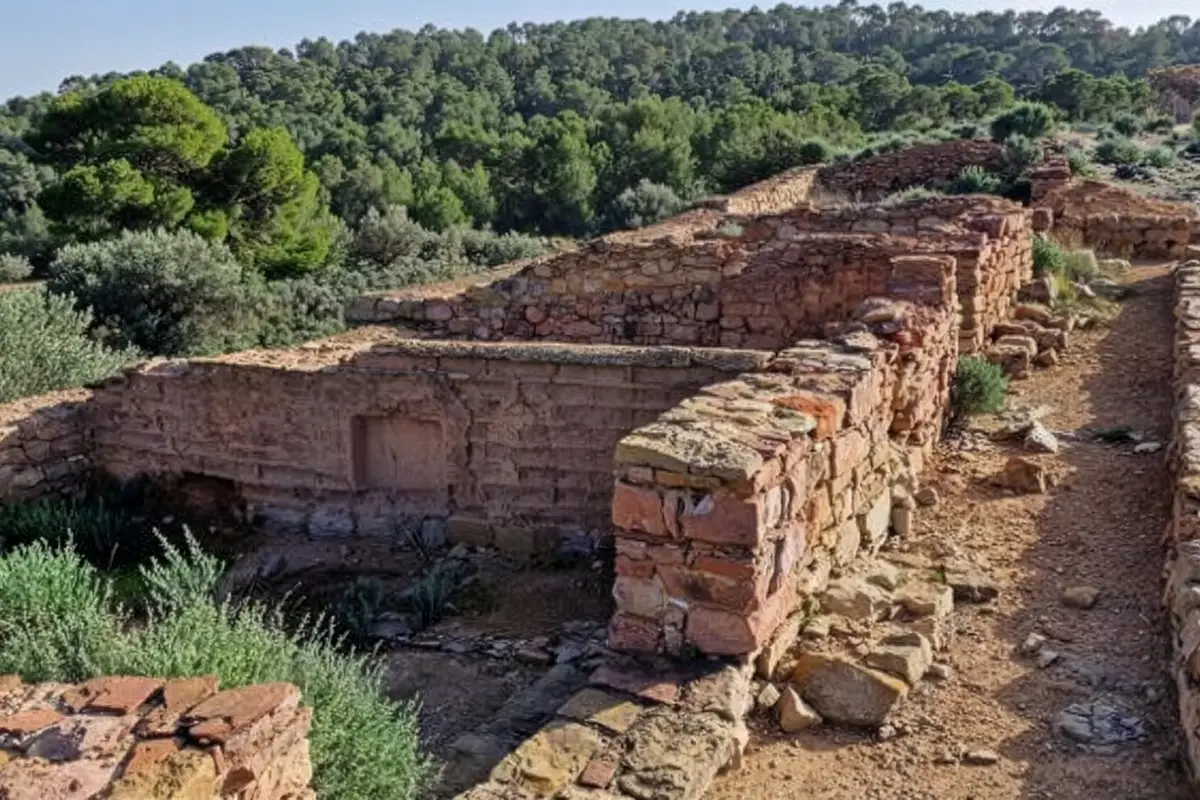
The Castellet de Bernabé is a small Iberian settlement dating from the 4th to 2nd centuries BC, on the road from Llíria to Alcublas. It is a unique example of rural Iberian domestic architecture in Valencia.
A rural Iberian settlement
Just a few kilometres from the centre of Llíria, on the road up to Alcublas, lie the remains of the Castellet de Bernabé, a small Iberian settlement from the 4th to 2nd centuries BC. Unlike the large urban centre on the Tossal de Sant Miquel, the Castellet represents rural Iberian architecture: a small farming community that lived off crops and livestock in Edetanian territory.
What to see
The site reveals the layout of several Iberian homes with their different functional areas: living quarters, storeroom and workspace. Excavations have recovered everyday objects that help reconstruct the daily lives of its inhabitants.
PRACTICAL INFORMATION
· Location: Llíria-Alcublas road
· Guided tour: book in advance at the Tourist Info
LA MONT-RAVANA
Iberian Site in Llíria
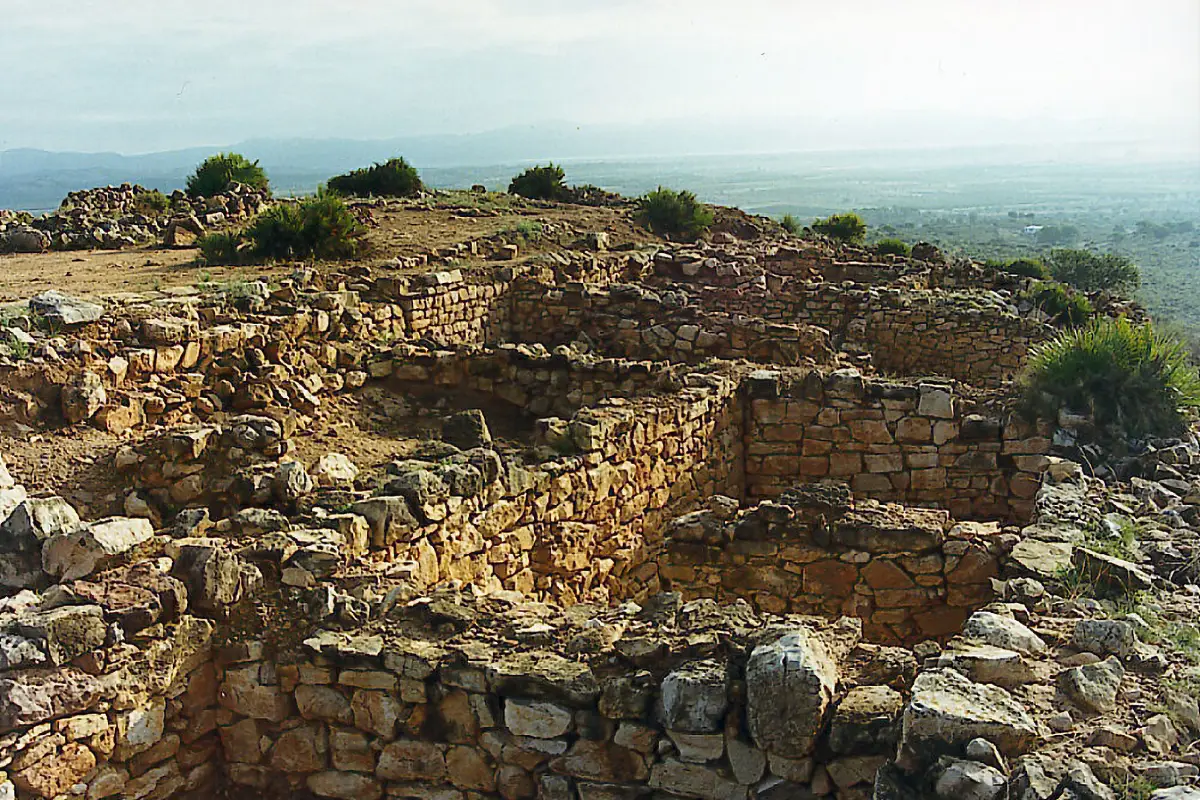
La Mont-ravana is an Iberian site within the municipality of Llíria, strategically perched above the Camp de Túria. It preserves remains of defensive structures and finds from the Edetanian world.
A strategic position for thousands of years
La Mont-ravana sits on a promontory with commanding views over the whole Camp de Túria plain. Its strategic position made it a control point for Edetanian territory in the centuries before the Roman conquest. The surviving remains include defensive structures and pottery typical of the Iberian world of the 4th and 3rd centuries BC.
In the context of Edetanian territory
La Mont-ravana is one of many Iberian settlements dotted across Edetania. Studied together with the Tossal de Sant Miquel and the Castellet de Bernabé, it helps reconstruct the settlement pattern and territorial control of Iberian culture in the Camp de Túria.
TOSSAL DE SANT MIQUEL
IBERIAN EDETA
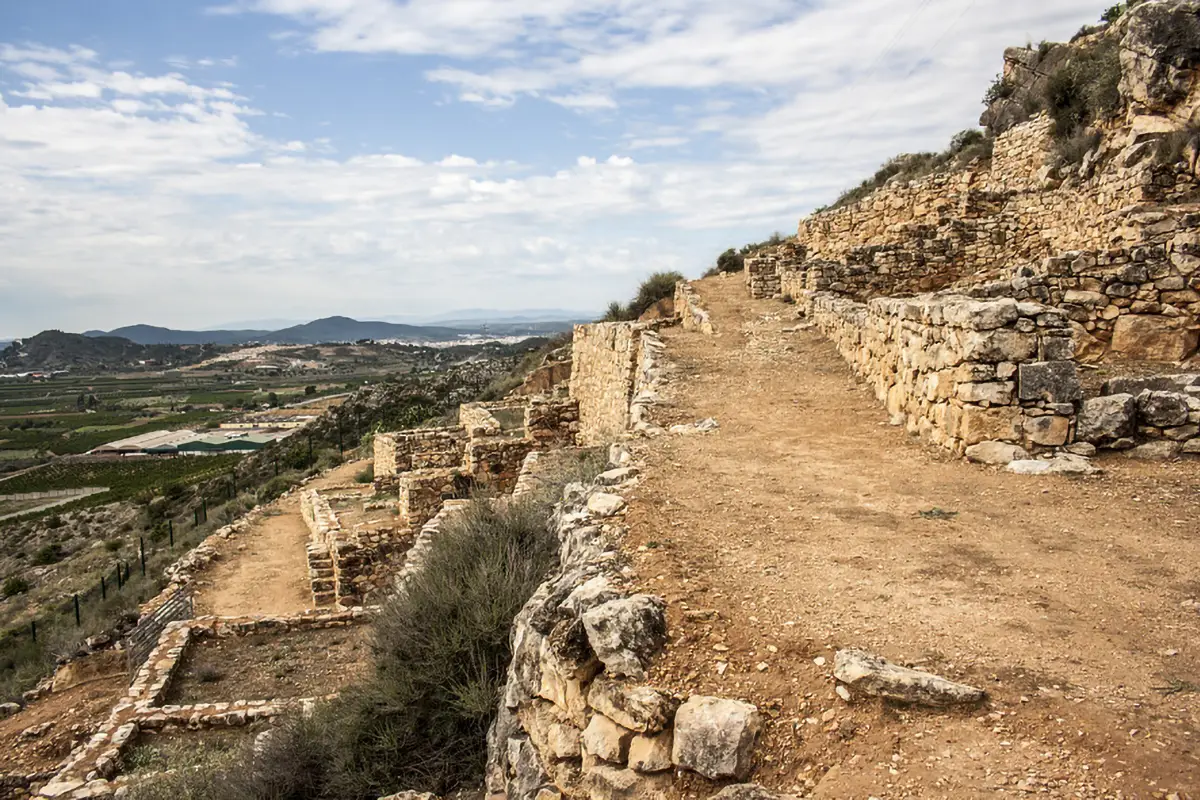
The Tossal de Sant Miquel holds the remains of Edeta, the Iberian capital of Edetania. The site has yielded the most important collection of painted Iberian pottery on the Peninsula.
The most important Iberian city in the Valencia region
The Tossal de Sant Miquel is the hill that overlooks the town of Llíria. For centuries, its summit and slopes were home to ancient Edeta, the political, economic and religious capital of Edetania. Declared a Site of Cultural Interest in 1995, it is one of the most important sites of the Iberian world.
The pottery treasure of Edeta
Archaeological work on the Tossal de Sant Miquel has brought to light the most outstanding collection of painted pottery of the entire Iberian culture. Its most celebrated pieces include the Vase of the Warriors, which depicts scenes of combat and processions, and the famous Kalathos of the Dance, from the 3rd to 2nd century BC, which shows men and women dancing to the music of a female flute player. It is the earliest documented depiction of music in the Valencia region, and proof that music in Llíria has roots going back more than two thousand years. The finest pieces are kept at the Museu de Prehistòria de València and the Archaeological Museum of Llíria (MALL).
PRACTICAL INFORMATION
· The site is open to visit freely. For a guided tour explaining the historical and archaeological context, contact the Tourist Info in advance.
· Access: free to the outdoor site
· Guided tour: book in advance at the Tourist Info (962 79 15 22)
· Languages: Spanish, Valencian, English and French