Arab and Medieval
Heritage
Explore Llíria's Arab and medieval heritage: the 12th-century Arab Baths, the medieval walls, the Vila Vella and the 13th-century Church of La Sang. The historic heart of the town.
ARAB BATHS
ISLAMIC LYRIA
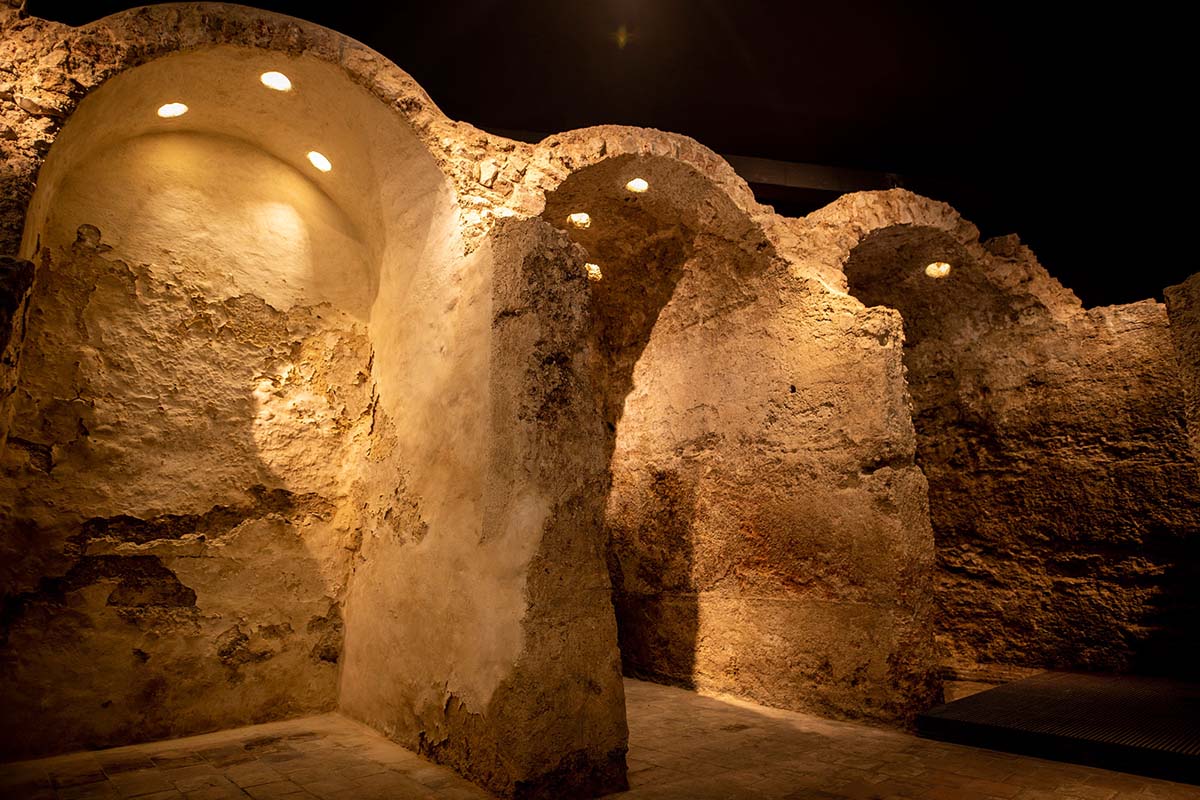
Before it was reconquered by the troops of James I in 1238, Llíria was the Arab medina of Lyria: a Muslim town of strategic importance in the Valencian territory. In 1090, El Cid besieged it without success. Over more than five centuries of Islamic rule, the Arabs left Llíria a first-rate architectural legacy, of which the Arab Baths are the most impressive testimony.
A 12TH-CENTURY HAMMAM
Covering more than 400 m² across several rooms kept at different temperatures (a rest room, a cold room (bayt al-barid), a warm room (bayt al-wastani) and a hot room (bayt al-sajun)), the Arab Baths of Llíria are one of the best-preserved Islamic bath complexes in the Valencia region. Their architecture, with horseshoe arches, barrel vaults and star-shaped skylights that filtered the light, recreates the atmosphere of a medieval hammam in extraordinary fashion.
THE ROMAN COLLECTION
The Roman section includes Latin inscriptions, architectural elements, coins and part of the Llíria Treasure: more than 6,000 silver denarii found within the municipality, one of the largest Roman coin hoards ever discovered in the Valencia region.
LESSON FOR A CELEBRATION
The museum also houses the series of paintings "Lesson for a Celebration", which tells the story of the arrival of Christianity in Edeta through a sequence of scenes of great artistic and historical value.
PRACTICAL INFORMATION
· Opening hours: Tue-Fri 12:00-13:00 and 19:00-20:00 / Sat-Sun and public holidays 12:00-13:00 and 18:00-19:00
· Phone: 962 79 15 22 / 667 48 22 94
· The Arab Baths can be visited free of charge during monument opening hours. For an in-depth guided tour, contact the Tourist Info.
CHURCH OF LA SANG
A CHURCH THAT IS PART OF SPAIN'S HISTORY
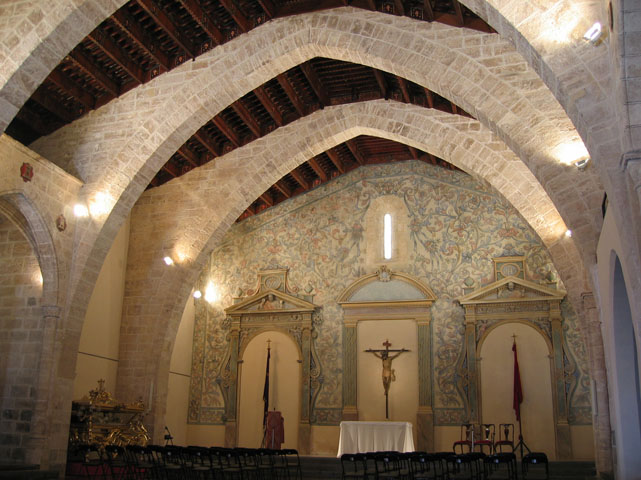
Llíria's Church of La Sang is one of the finest monuments of the Valencian Gothic of the Reconquest and has been declared a National Monument. Built in the 13th century on the remains of the great mosque of the old Arab medina, the church embodies the layering of cultures that defines Llíria's history.
THE MUDÉJAR COFFERED CEILING – A MARVEL OF MEDIEVAL ART
The most extraordinary feature of the Church of La Sang is its stunning 13th-century polychrome Mudéjar coffered ceiling: a painted wooden roof adorned with geometric interlacing, musicians, animals and scenes of medieval life, and one of the most remarkable examples of Valencian Mudéjar art. The ceiling depicts medieval troubadours playing instruments – further proof of how deeply music has been rooted in Llíria over the centuries.
A STAGE FOR MUSIC AND CULTURE
The outstanding acoustics of the Church of La Sang have made it one of Llíria's most special venues for chamber, choral and early music concerts. It has hosted international events as part of the UNESCO Creative Cities Network for Music.
PRACTICAL INFORMATION
· Opening hours: Tue–Fri 13:00–14:00 and 20:00–21:00 / Sat–Sun and public holidays 13:00–14:00 and 19:00–20:00
· Address: C. Mayor Antigua, 1, 46160 Llíria
FORN DE LA VILA
THE BREAD OF THE MEDIEVAL TOWN, A SPACE FOR LIVING CULTURE
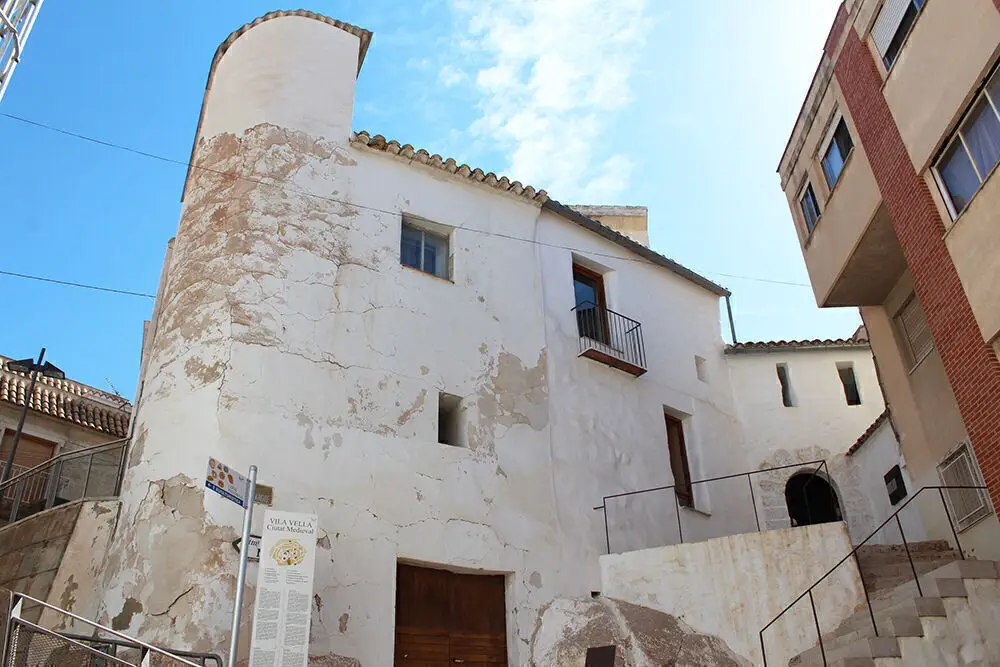
The Forn de la Vila – "the town oven" – was the municipal bakehouse where the people of Llíria baked their bread throughout the Middle Ages and the early modern period. Built in the 15th century, it shares the same construction style as Ca la Vila Vella: semicircular arches, vaults and sturdy stone architecture that has stood for more than five centuries.
DAILY LIFE IN THE MIDDLE AGES
The Forn de la Vila is one of the few surviving examples of everyday civil architecture in Llíria's old town. A visit lets you picture the daily life of the medieval townsfolk who came here to bake their bread, in a building that is now part of the historic route through the Vila Vella.
PRACTICAL INFORMATION
· Opening hours: depending on the programme – ask at the Tourist Info
· Address: C/ Sang, 8, 46160 Llíria. · Price: free admission (with some exceptions)
· Phone: 96 279 15 22
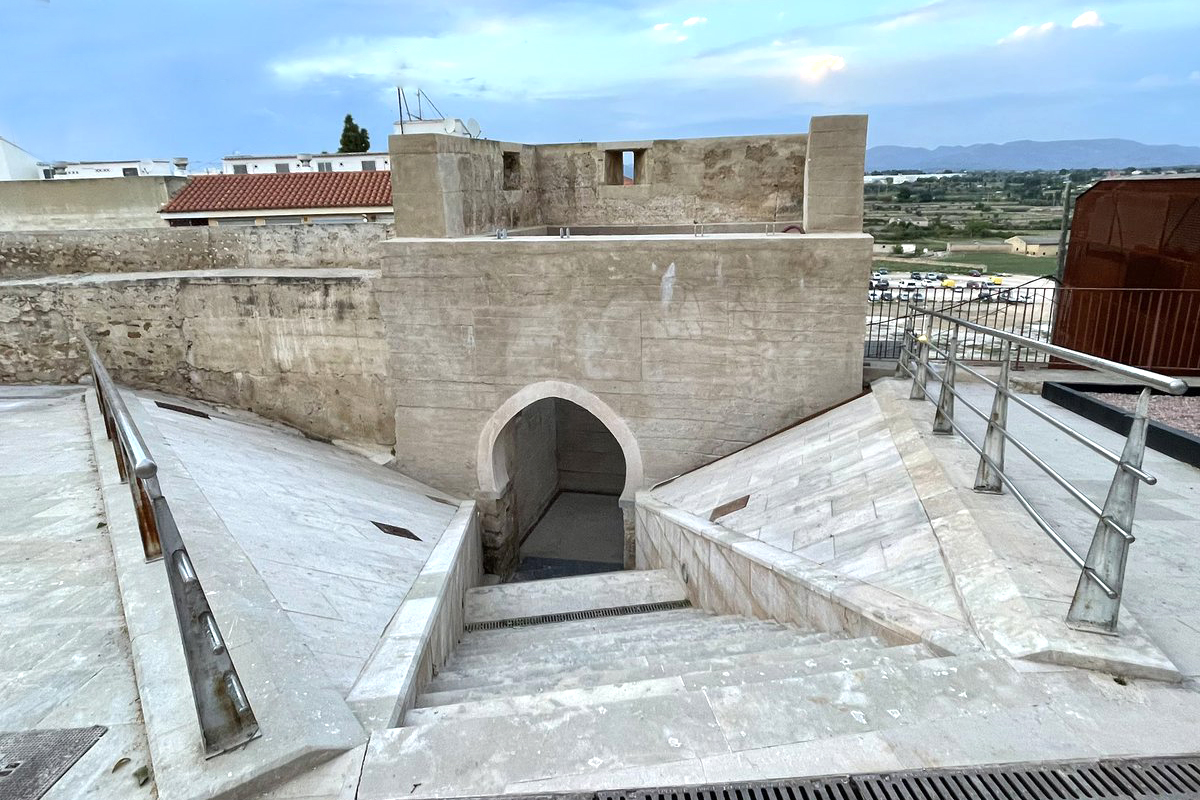
PORTAL DEL PONT DE VIDRE
A HISTORIC GATEWAY TO THE VILA VELLA
The Portal del Pont de Vidre is one of the historic gateways to the medieval walled quarter of Llíria's Vila Vella – a remnant of the old town defences that protected the city during the Middle Ages.
AN ENTRANCE TO THE HISTORIC QUARTER
In the Middle Ages, Llíria was protected by a defensive system of walls, towers and gates. The Portal del Pont de Vidre is one of the elements that has survived to this day, a reminder of how important it was to control access to the town and protect its inhabitants in times of conflict.
LIVING HERITAGE OF THE VILA VELLA
Now part of the fabric of the old town, the gateway bears witness to how Llíria has evolved over the centuries. A visit helps you understand how the medieval town was laid out and uncovers one of the most historically valuable corners of the Vila Vella.
PRACTICAL INFORMATION
· Free access
· Address: Carrer Sant Joan de Mata, 34, 46160 Llíria
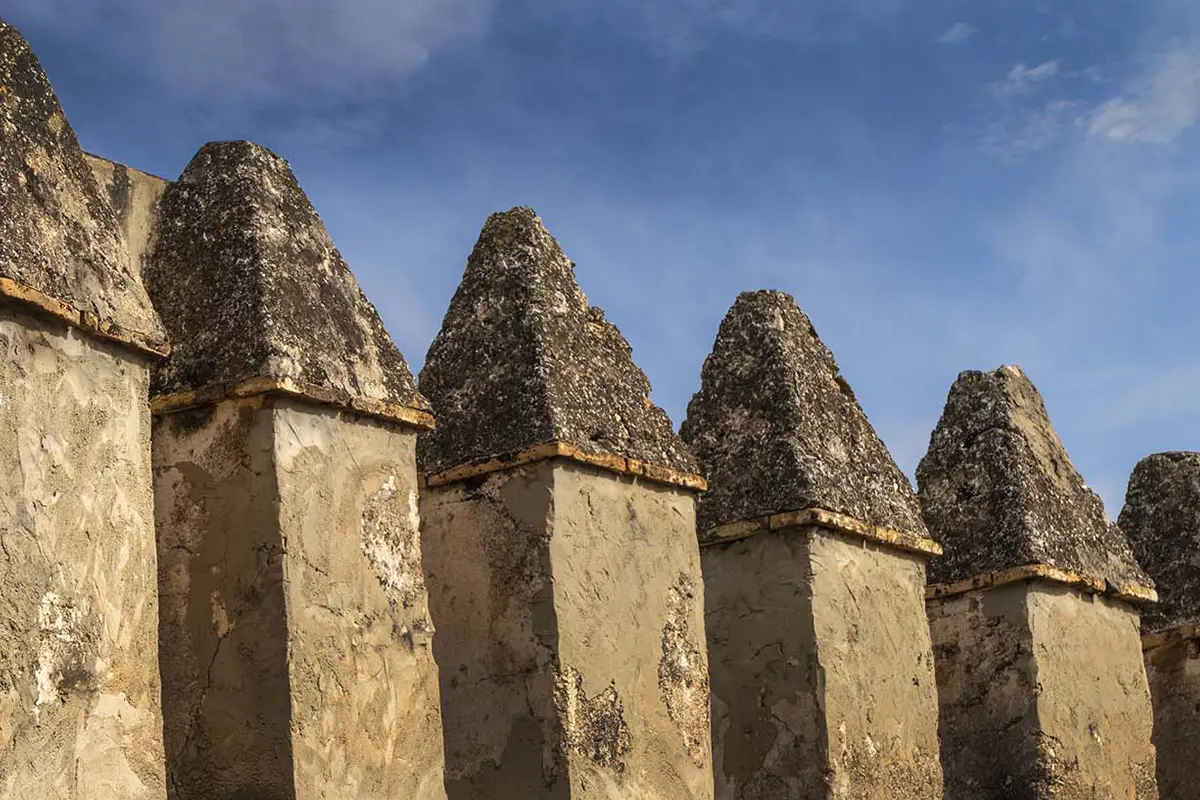
MEDIEVAL WALL
REMAINS OF THE WALLED ENCLOSURE
The remains of Llíria's medieval wall help you imagine the defensive enclosure that protected the town during the Middle Ages. Free to visit as part of a walk around the Vila Vella.
DEFENDING THE CHRISTIAN TOWN
After its conquest by James I in 1238, Llíria became an important town in the Kingdom of Valencia. To protect its population, a wall was built around the urban core of the Vila Vella. The remains that survive today give an idea of how extensive and solid this medieval defence was.
VISITING THE REMAINS OF THE WALL
The surviving stretches of the medieval wall can be seen woven into the urban fabric of the Vila Vella, built into later structures or visible on the façades and in the courtyards of historic buildings. A visit to the wall can easily be combined with a full tour of the old town.
VILA VELLA DE LLÍRIA
MEDIEVAL OLD TOWN
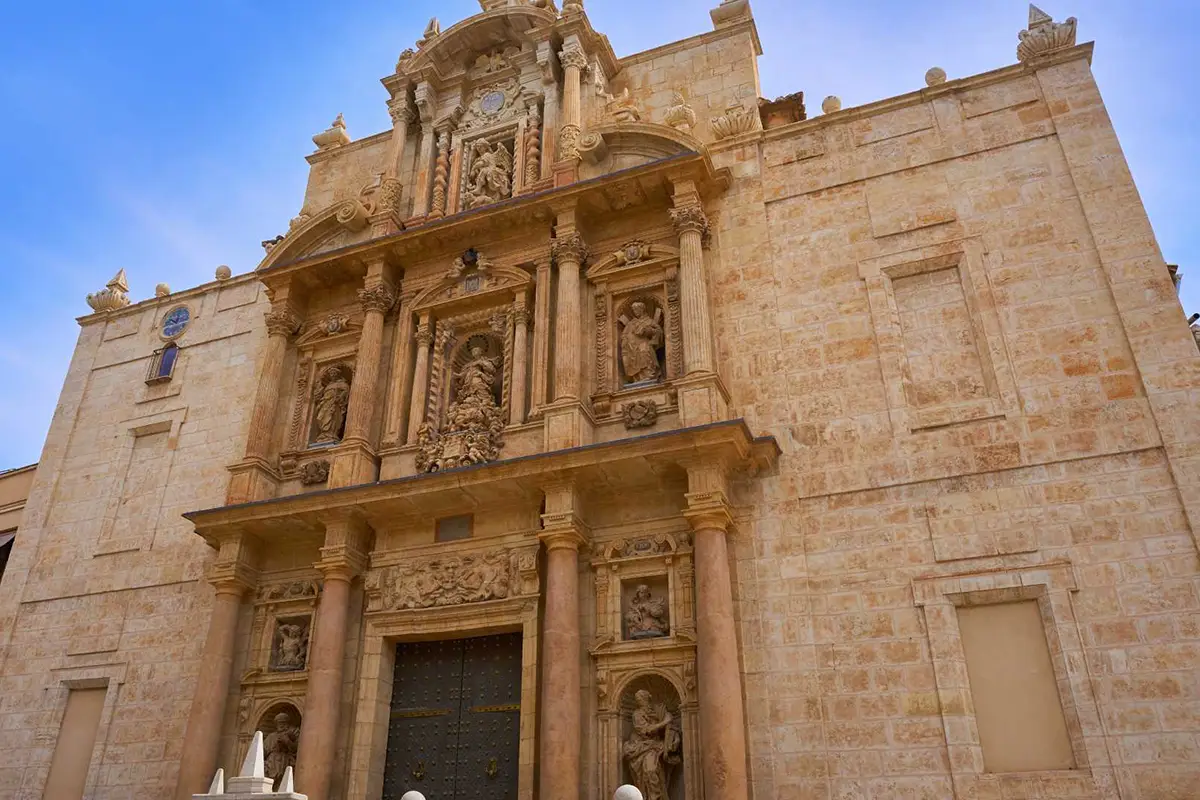
Llíria's Vila Vella preserves the street layout of the old Arab medina: medieval streets, historic buildings from the 13th to the 17th century and the atmosphere of the most authentic old town in the area.
A STROLL THROUGH HISTORY
Llíria's Vila Vella – literally "the old town" – is the historic heart of the city, where its past can be read on every corner. Its street plan keeps the structure of the old Arab medina: narrow, winding lanes that followed the contours of the hill on which the medieval town was built.
A QUARTER WITH CENTURIES OF HISTORY
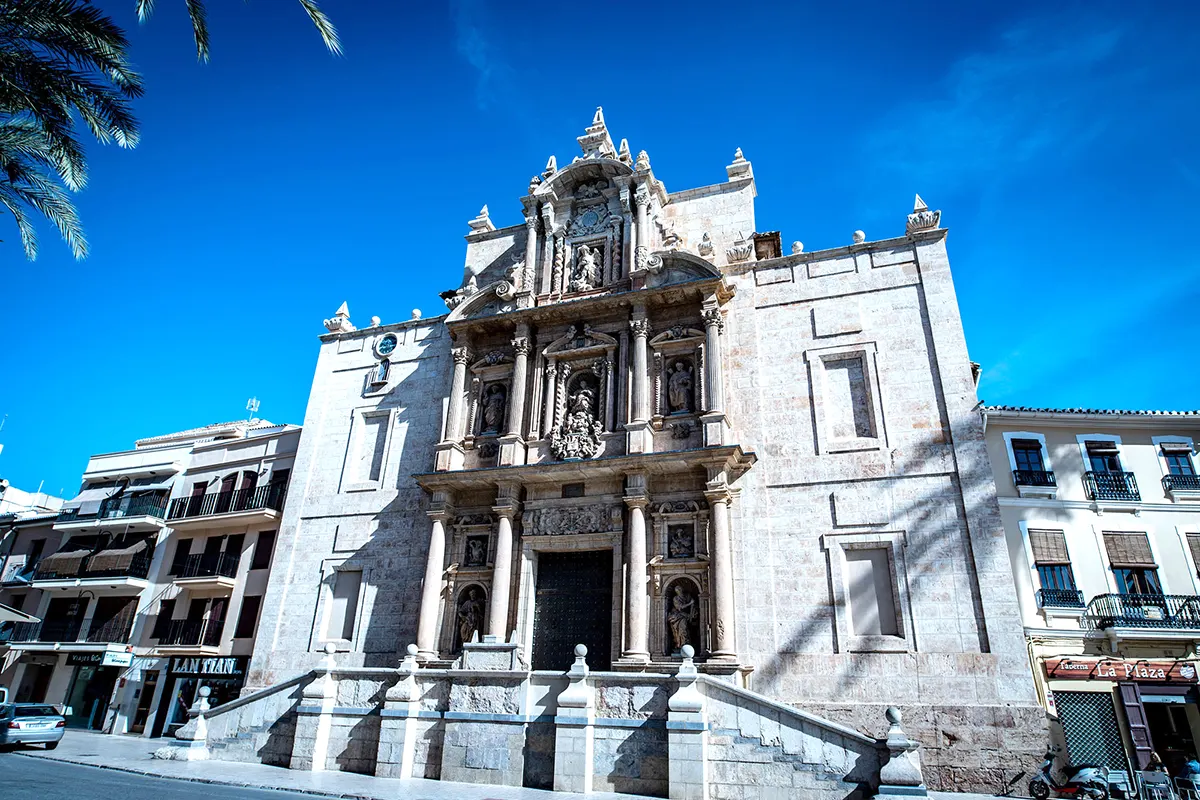
A walk through the Vila Vella reveals buildings and monuments spanning almost a thousand years of history: from mosques converted into churches after the Christian conquest to 15th-century Renaissance palaces and 17th-century Baroque churches. This blend of styles and eras is one of the most fascinating features of this historic quarter.
WHAT TO SEE IN THE VILA VELLA
· The main monuments you can visit on a stroll through the Vila Vella are: the Church of La Sang (National Monument, 13th century), Ca la Vila Vella (Renaissance palace, 15th century), the Forn de la Vila (medieval bakehouse, 15th century), the remains of the medieval wall and the Church of the Assumption (17th-century Valencian Baroque).